
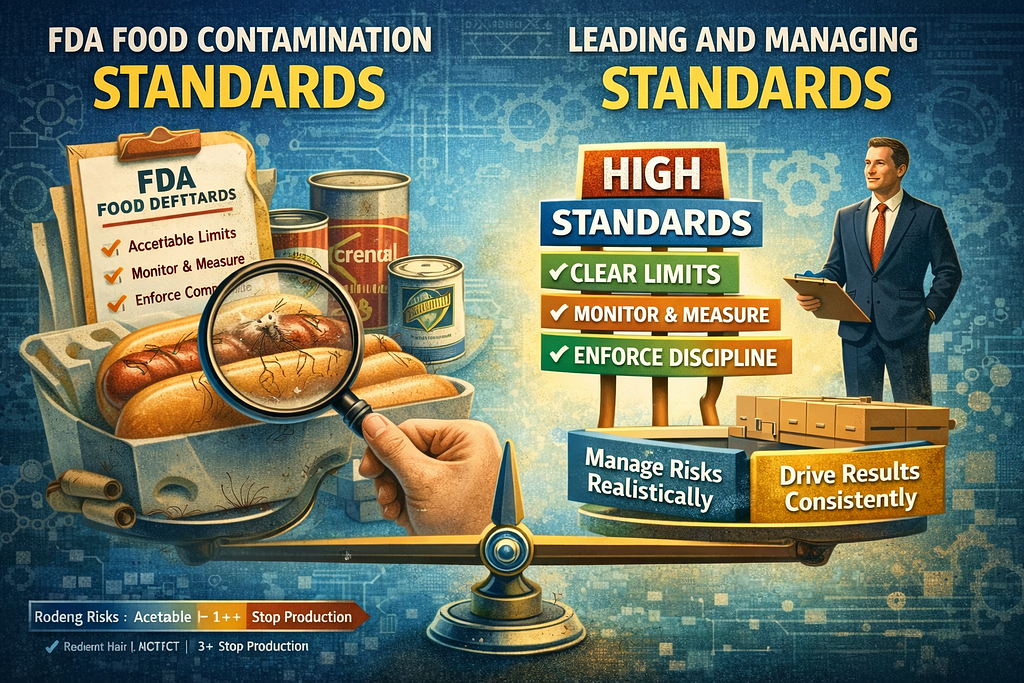
Recently, my pastor opened a sermon with something I did not expect to hear in church. He started talking about how the FDA regulates the amount of rodent hair allowed in hot dogs. You could feel the reaction ripple through the room. People shifted in their seats. A few made their discomfort known. I, on the other hand, was locked in. Within seconds, I had my phone out, going down a rabbit hole on a topic I had never considered before. I will admit, I remember very little about the rest of the sermon.
What sounds absurd at first is actually a masterclass in how standards work in the real world. The FDA does not operate under the illusion of zero contamination. Instead, the FDA defines acceptable limits for defects that are natural, unavoidable, and not harmful to human health. This is not a compromise of quality but rather a commitment to control.
In large scale systems, perfection is not achievable. The FDA recognizes this and sets measurable thresholds, monitors performance, and enforces compliance. The result isn’t chaos but consistency, safety, and trust… along with the slightly unsettling realization that someone, somewhere, has quantified all of this.
Now contrast the FDA’s approach with how many organizations define standards. Zero mistakes. Perfect execution. No defects. These phrases sound decisive in a boardroom, but they are not operational in reality. When expectations ignore how work actually happens, behavior adapts in predictable ways. Problems get hidden, accountability weakens, and performance becomes harder to measure — not easier to improve. Everything looks perfect right up until it very much is not.
The FDA’s model is more effective. It starts with acknowledging reality, then defines clear and measurable limits, focuses on what actually matters, and enforces those standards consistently. It does not pretend problems don’t exist. Instead, it manages problems with clarity and discipline.
Here is the deeper lesson for leaders. Having high standards is not about eliminating every flaw. Such standards are about understanding what cannot be eliminated, reducing that which cannot be eliminated intelligently, and refusing to tolerate what creates real risk. The FDA is not suggesting contamination is acceptable; the FDA is ensuring contamination is controlled to a level that is safe, measurable, and enforceable. This approach may not exactly be comforting at a backyard barbecue but is highly effective as a system.
Leadership works the same way. The goal is not perfection. The goal is clarity. Standards should drive behavior, not distort it. They should be grounded in reality, not detached from it. Because the moment standards stop reflecting how work actually happens, they stop functioning as standards. They become all label and no substance, like a hot dog you probably should not ask too many questions about.
If you are curious about what actually defines good food manufacturing practices, the FDA spells it out in detail here:
https://www.fda.gov/food/current-good-manufacturing-practices-cgmps-food-and-dietary-supplements/food-defect-levels-handbook
Consider such information equal parts informative and appetite suppressing.
If the FDA Doesn’t Expect Perfection, Why Do You? was originally published in Horizon Performance on Medium, where people are continuing the conversation by highlighting and responding to this story.